
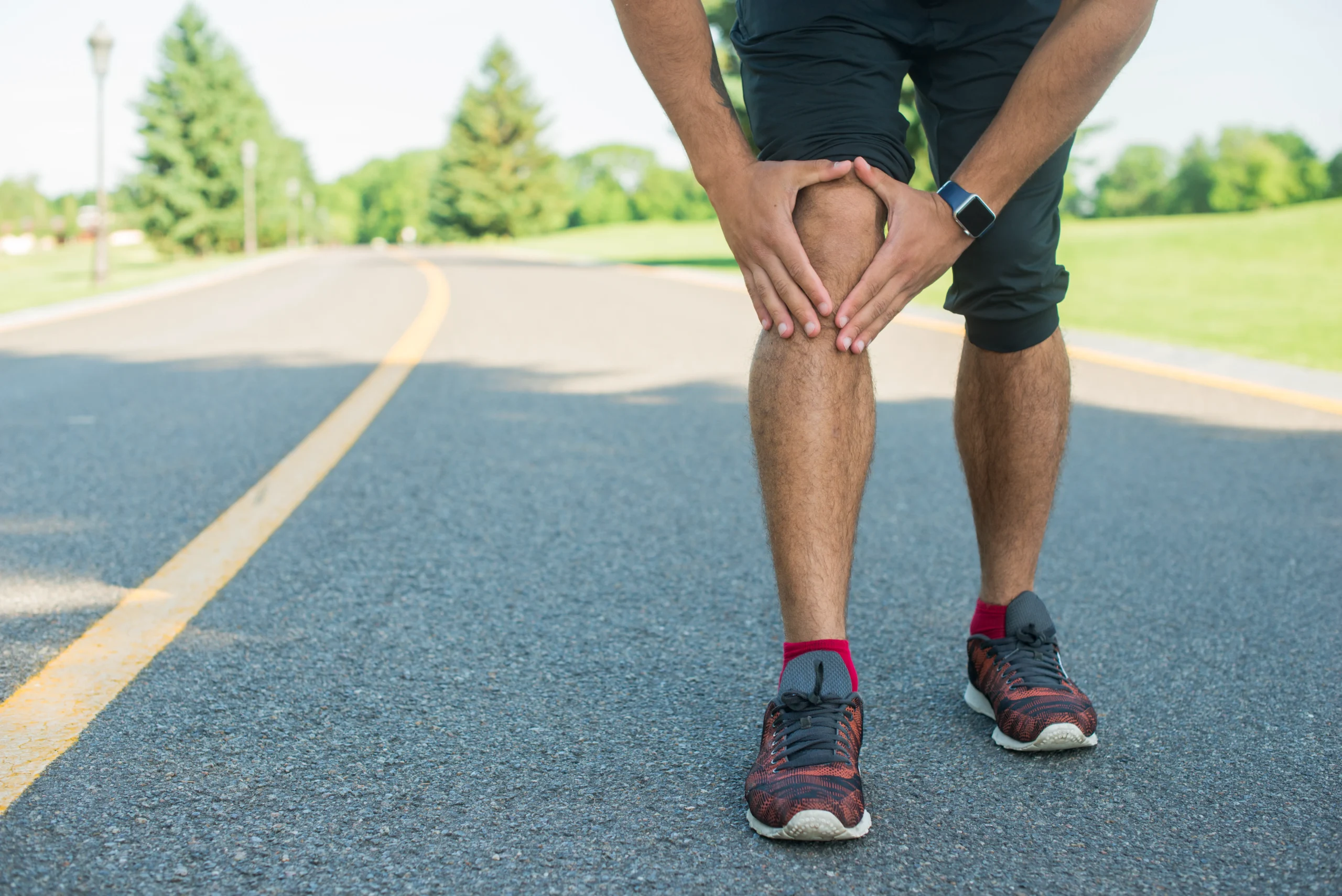
Where Is Your Knee Pain? A Quick Location Guide
The location of pain after walking is one of the most useful clues to the underlying cause. Use this table as a starting point:|
Pain Location |
Most Likely Cause |
|
Front of the knee (around the kneecap) |
Patellofemoral pain syndrome, patellar tendinopathy |
| Inner (medial) side of the knee |
Medial compartment osteoarthritis, pes anserine bursitis, medial meniscus tear |
|
Outer (lateral) side of the knee |
IT band syndrome, lateral compartment OA, lateral meniscus tear |
| Behind the knee (popliteal area) |
Baker's cyst, posterior horn meniscus tear, hamstring tendinopathy |
|
Generalised / diffuse knee pain |
Osteoarthritis, inflammatory arthritis, referred pain from hip |
7 Common Causes of Knee Pain After Walking
1. Knee Osteoarthritis
The most common cause of knee pain after walking in adults over 45. As cartilage degenerates, the joint loses its cushioning and each step transfers load directly to sensitised bone. Pain typically builds during a walk and worsens over longer distances. Stiffness after rest — particularly on first standing — is characteristic. Knee arthritis treatment in Mumbai covers the full range of management options, from physiotherapy to joint replacement.2. Patellofemoral Pain Syndrome (Runner's Knee)
Pain arising from poor tracking of the kneecap (patella) against the femoral groove. Felt at the front of the knee, it worsens with walking on inclines, stairs, and after prolonged sitting. Common in younger adults and those who have recently increased their walking distance or pace. Caused by muscle imbalance, foot pronation, or poor training technique.- Treatment: quadriceps strengthening, patellar taping, footwear correction, gait retraining
3. Meniscus Tear
A torn meniscus — the knee's internal shock absorber — causes joint-line pain that is typically worsened by walking, twisting, or squatting. In degenerative tears (common over 40), pain may come on gradually without a specific injury. A clicking or catching sensation during walking is a telling sign. See our detailed guide on meniscus tear symptoms, causes and treatment for full information.4. IT Band Syndrome
The iliotibial band is a thick strip of connective tissue running along the outer thigh to the knee. When it becomes tight and inflamed — usually from overuse or rapid increases in walking distance — it causes sharp pain on the outer side of the knee, typically appearing after a consistent number of steps and easing with rest.- Treatment: IT band stretching, hip abductor strengthening, foam rolling, temporary activity reduction
5. Pes Anserine Bursitis
Inflammation of the bursa located on the inner side of the knee, just below the joint. Particularly common in overweight individuals and those with medial compartment osteoarthritis. Causes a burning or aching pain on the inner knee after walking, often worse climbing stairs.- Treatment: ice, NSAIDs, physiotherapy, corticosteroid injection if persistent
6. Patellar Tendinopathy (Jumper's Knee)
Degeneration of the patellar tendon from repetitive loading — common in those who walk on hard surfaces, have recently increased distance, or carry excess weight. Pain is localised just below the kneecap and is typically worst at the start of a walk, easing mid-activity, then returning afterwards.- Treatment: eccentric loading exercises, load management, shockwave therapy, PRP injection
7. Referred Pain from the Hip or Spine
Not all knee pain originates in the knee. Hip osteoarthritis classically refers pain to the inner knee and thigh, mimicking knee pathology. Lumbar spine conditions (L3/L4 nerve root compression) can also cause anterior knee pain that worsens with walking. A thorough clinical examination is essential to distinguish true knee pathology from referred pain.- Clue: knee pain without local tenderness, associated hip stiffness, or back symptoms
- Treatment: directed at the primary source — hip or spine — not the knee
How Is Knee Pain After Walking Treated?
Treatment is always matched to the underlying cause. At Happy Knees Knee Pain Clinic, Malad, the approach follows a stepwise progression from conservative care to intervention:Conservative Management (First Line for All Causes)
- Activity modification — temporarily reduce walking distance; switch to flat, cushioned surfaces
- Footwear review — supportive footwear and custom orthotics correct alignment and offload the knee
- Physiotherapy — targeted exercises to strengthen the quadriceps, hamstrings, hip abductors, and calf
- Weight management — each kilogram lost reduces knee load by approximately 4 kg per step
- Anti-inflammatory medications — NSAIDs for acute flare-ups; topical gels for localised pain
- Ice and compression — effective for swelling control after activity; see our guide on nutrition for joint health for dietary anti-inflammatory strategies
Injection Therapies
- Corticosteroid injection — rapid, targeted anti-inflammatory effect for bursitis, synovitis, and OA flares
- Viscosupplementation (hyaluronic acid) — joint lubrication for moderate osteoarthritis
- PRP (Platelet-Rich Plasma) — promotes healing in tendinopathy and early-to-moderate OA
Surgical Options (When Conservative Treatment Fails)
For structural causes that do not respond to conservative care, minimally invasive surgery may be appropriate. Knee arthroscopy addresses meniscal tears, cartilage damage, and loose bodies. Cartilage repair procedures are suitable for focal chondral defects. For advanced osteoarthritis causing walking-related pain that no longer responds to any conservative measure, knee arthroplasty may be the most appropriate long-term solution — see our guide on when to consider knee replacement surgery for guidance.When Should You See an Orthopaedic Doctor?
Mild post-walk discomfort after an unusually long or strenuous outing can be normal. Seek professional evaluation if you notice:- Pain that is consistently present after your normal daily walking distance
- Swelling that develops after walking and does not settle fully overnight
- A locking, clicking, or giving-way sensation during or after walking
- Pain that is progressively worsening over weeks or months
- Night pain or pain at rest that has developed alongside the walking pain
- Pain limiting your ability to perform essential daily activities
Frequently Asked Questions
Q1. Why does my knee hurt after walking?
The most common causes are osteoarthritis, patellofemoral pain syndrome, IT band syndrome, meniscus tears, and bursitis. Location of the pain is the most useful clue — see the table above.Q2. Is it normal for knees to hurt after a long walk?
Mild muscle fatigue after an unusually long walk can be normal. Consistent or worsening pain after your usual walking distance is not normal and should be evaluated.Q3. What is the fastest way to relieve knee pain after walking?
Rest, ice for 15–20 minutes, compression, and elevation (PRICE) immediately after walking. NSAIDs reduce acute inflammation. Address the underlying cause with a physiotherapist for lasting relief.Q4. Can the wrong footwear cause knee pain after walking?
Yes. Worn-out soles, flat unsupportive footwear, or excessive heel height all alter gait mechanics and increase knee load. A footwear review and custom orthotics can significantly reduce walking-related knee pain.Q5. Does walking make knee arthritis worse?
Walking does not worsen arthritis when done at appropriate distances on forgiving surfaces. In fact, regular low-impact walking strengthens the muscles around the joint and is recommended. Sudden increases in distance or hard-surface walking are what trigger flare-ups.Q6. When should I stop walking and see a doctor?
If pain is worsening with every outing, accompanied by swelling or instability, or limiting your normal daily distances — it is time to seek professional evaluation rather than continuing to push through.Why Choose Us?
At Happy Knees Orthopaedic Clinic, we provide expert, compassionate care to help you move pain-free and improve your quality of life. Specializing in knee and joint treatments, we combine advanced technology with experienced orthopedic expertise to deliver accurate diagnosis and personalized treatment plans. With a strong focus on patient comfort, clear communication, and evidence-based care in a professional, welcoming environment, your joint health is always our priority. To book a consultation, contact 08341535353 or visit https://happyknees.in/References & Citations
- NICE. Osteoarthritis: care and management. Clinical Guideline CG177. 2022.
- Crossley KM, et al. Patellofemoral pain consensus statement from the 4th International Patellofemoral Pain Research Retreat. Br J Sports Med. 2016;50(14):839–843.
- van der Worp MP, et al. Iliotibial band syndrome in runners: a systematic review. Sports Med. 2012;42(11):969–992.
- Childress MA, Beutler A. Management of chronic tendon injuries. Am Fam Physician. 2013;87(7):486–490.
- Kolasinski SL, et al. ACR/AF Guideline for the Management of Osteoarthritis of the Knee. Arthritis Care Res. 2020;72(2):149–162.